Christianity Grows in Syrian Town Once Besieged by Islamic State

A community of Syrians who converted to Christianity from Islam is growing in Kobani, a town besieged by Islamic State for months, and where the tide turned against the militants four years ago.

The converts say the experience of war and the onslaught of a group claiming to fight for Islam pushed them towards their new faith. After a number of families converted, the Syrian-Turkish border town’s first evangelical church opened last year.

Islamic State militants were beaten back by U.S. air strikes and Kurdish fighters at Kobani in early 2015, in a reversal of fortune after taking over swaths of Iraq and Syria. After years of fighting, U.S.-backed forces fully ended the group’s control over populated territory last month.

Though Islamic State’s ultra-radical interpretation of Sunni Islam has been repudiated by the Islamic mainstream, the legacy of its violence has affected perceptions of faith.

Many in the mostly Kurdish areas of northern Syria, whose urban centres are often secular, say agnosticism has strengthened and in the case of Kobani, Christianity.

Christianity is one of the region’s minority faiths that was persecuted by Islamic State.

Critics view the new converts with suspicion, accusing them of seeking personal gain such as financial help from Christian organisations working in the region, jobs and enhanced prospects of emigration to European countries.

The newly-converted Christians of Kobani deny those accusations. They say their conversion was a matter of faith.

“After the war with Islamic State people were looking for the right path, and distancing themselves from Islam,” said Omar Firas, the founder of Kobani’s evangelical church. “People were scared and felt lost.”

Firas works for a Christian aid group at a nearby camp for displaced people that helped set up the church.

He said around 20 families, or around 80 to 100 people, in Kobani now worship there. They have not changed their names.

“We meet on Tuesdays and hold a service on Fridays. It is open to anyone who wants to join,” he said.

The church’s current pastor, Zani Bakr, 34, arrived last year from Afrin, a town in northern Syria. He converted in 2007.

“This was painted by IS as a religious conflict, using religious slogans. Because of this a lot of Kurds lost trust in religion generally, not just Islam,” he said.

Many became atheist or agnostic. “But many others became Christian. Scores here and more in Afrin.”

MISSIONARIES AND CRITICS

One man, who lost an arm in an explosion in Kobani and fled to Turkey for medical treatment, said he met Kurdish and Turkish converts there and eventually decided to join them.

“They seemed happy and all talked about love. That’s when I decided to follow Jesus’s teachings,” Maxim Ahmed, 22, said, adding that several friends and family were now interested in coming to the new church.

Some in Kobani reject the growing Christian presence. They say Western Christian aid groups and missionaries have exploited the chaos and trauma of war to convert people and that local newcomers to the religion see an opportunity for personal gain.

“Many people think that they are somehow benefitting from this, maybe for material gain or because of the perception that Christians who seek asylum abroad get preferential treatment,” said Salih Naasan, a real estate worker and former Arabic teacher.

Thousands of Christians have fled the region over decades of sectarian strife. From Syria they have often headed for Lebanon and European countries.

U.S. President Donald Trump in 2017 banned entry for all Syrian refugees indefinitely and imposed a 90-day ban on travel from several other predominantly Muslim countries.

“It might be a reaction to Daesh (Islamic State) but I don’t see the positives. It just adds another religious and sectarian dimension which in a community like this will lead to tension,” said Naasan, a practicing Muslim.

Naasan like the vast majority of Muslims rejects Islamic State’s narrow and brutal interpretation of Islam. The group enslaved and killed thousands of people from all faiths, reserving particular brutality for minorities such as the Yazidis of northern Iraq.

Most Christians preferred not to give their names or be interviewed, saying they fear reaction from conservative sectors of society.

The population of Kobani and its surroundings has neared its original 200,000 after people returned, although only 40,000 live in the town itself, much of which lies in ruins.

The post Christianity Grows in Syrian Town Once Besieged by Islamic State appeared first on Faith Matters.

Categories: Christianity, Conversion, Islamic State, Kobane, Kobani, News, Syria
IS Supporter Husnain Rashid Who Encouraged Others to Target Prince George Has Sentence Cut

An Islamic State supporter who called for an attack on Prince George has had his minimum jail term cut on appeal.

Husnain Rashid used a chat group to encourage supporters to target the young prince, posting the address of his school with the chilling message “even the Royal family will not be left alone”.

The 32-year-old, of Leonard Street, Nelson, Lancashire, was handed a life sentence with a minimum term of 25 years at Woolwich Crown Court in July last year after pleading guilty to four terror offences.

But his tariff was reduced to 19 years by the Court of Appeal on Tuesday.

Lord Justice Holroyde, sitting with two other senior judges, upheld Rashid’s life sentence, rejecting an argument by his lawyers that it was not justified.

He told the court: “We are satisfied that (the Crown Court judge) was entitled to come to the conclusion that the seriousness of these offences, taken together, was such as to justify a sentence of life imprisonment.”

However, he said the original minimum term was too long, adding: “We accept that the judge fell into error in some aspects of his application of the sentencing guidelines.”

The court heard police found nearly 300,000 messages on Rashid’s mobile phone, and further evidence on his computer, when he was arrested in November 2017.

A message sent to a Telegram chat group on October 13 that year included a photograph of Prince George, then aged four, who had started at Thomas’s Battersea in south-west London a month earlier.

The picture was superimposed with silhouettes of two masked jihadi fighters and Rashid had added: “School starts early.”

The court heard his plans were “indiscriminate” and made no distinction between adult and child, or between members of fighting forces and civilians.

Lord Justice Holroyde said Rashid’s suggestions included injecting poison into supermarket ice creams and targeting Prince George at his first school.

He also discussed how to bring down an aircraft using lasers with a British terrorist in Syria, the court heard.

He also posted suggestions of which British football stadiums terrorists could strike following the deadly attack outside Besiktas’s ground in Turkey.

Over a year-long period before his arrest he ran a Telegram channel and online magazine, both named the Lone Muhajid, where he provided detailed information to help people plan and commit terror attacks.

His list of targets for “lone wolf” attacks, involving vehicles, weapons and bombs, were wide-ranging and included British Army bases, shopping centres and Government buildings.

He also suggested supporters should target high-profile events including the 2018 football World Cup in Russia and the New York Halloween parade.

The court heard he planned to flee to Syria to fight for IS and had researched potential travel routes, but had been unable to get a “recommendation” from a jihadi fighter by the time of his arrest.

Rashid also posted a photograph of the Burmese ambassador to the UK, saying “You know what to do”, and urged others to “fight and spill the blood to the apes in your land”.

Sentencing him, Judge Andrew Lees said: “The message was clear – you were providing the name and address of Prince George’s school, an image of Prince George’s school and the instruction or threat that Prince George and other members of the royal family should be viewed as potential targets.

“You provided what you regarded as inspiration for suitable targets for lone wolf terror attacks.

“Attacks in Western countries were, in your eyes, the only suitable acceptable alternative to jihad itself.”

Rashid initially maintained his innocence, but changed his pleas to guilty after the prosecution outlined its case at trial.

He admitted three counts of engaging in conduct in preparation of terrorist acts and one count of encouraging terrorism.

Two further charges of dissemination of a terrorist publication were laid on file.


The post IS Supporter Husnain Rashid Who Encouraged Others to Target Prince George Has Sentence Cut appeared first on Faith Matters.

Categories: Husnain Rashid, Islamic State, News, Prince George

Teenager Praising Adolf Hitler Tells Fellow Pupils He Was Going “On a Rampage” to “Kill Many People”

A teenager charged with terror offences told police that being arrested was “cool” and he would show off about it “forever”, a court has heard.

The 16-year-old boy is accused of accessing bomb-making instructions on the internet and making a potential bomb filled with shrapnel, but denies intending to harm anyone.

The trial at Leeds Crown Court heard that he told fellow pupils at his school that he was going to “go on a rampage” and “kill many people”.

The jury was told that the teenager also told students he was going to carry out a school shooting and had praised Adolf Hitler.

Paul Greaney QC, prosecuting, read out statements from the boy’s interview with the police following his arrest in August last year.

The court heard he said he would be able to show off to his friends about being arrested “forever”.

Mr Greaney said he told police: “When I have kids I’ll probably still talk about this.”

He described being in the cells as “wicked” and said the situation was “cool and funny”, the court was told.

But the jury heard he told police it “wouldn’t be a joke any more” if he was charged with offences.

The trial has heard that the boy developed an interest in extremist far right ideology and accessed videos and information about murder, torture and mutilation on the internet.

When asked about the violent material, the court heard he told police:

“I find that stuff cool like any teenager would.”

The teenager said he was bullied at school and would say and do “stupid stuff”, the court was told.

Mr Greaney said the boy told police he talked about bombs because:

“Bombs sound cool and will make me sound cooler. It makes me stand out and I look more cool.”

The barrister said the boy added: “I know in my head I wasn’t going to do anything, or haven’t really been doing anything wrong, so it’s cool to me.

“I know I wasn’t going to do anything bad or harm to anyone.”

The court has heard that a search of the teenager’s home in Bradford, West Yorkshire, found a device made from two carbon dioxide canisters joined together and filled with metal tacks, which could have been a “viable CO2 bomb” with the addition of gunpowder and a fuse.

Talking about the device in the interview with police, the court heard that the boy said: “If I was a terrorist, do you think I would leave the device on the bedroom floor?

“If I was a terrorist, I would hide it to the best of my abilities. Why would I have it in my bedroom just sitting on the floor?”

He denied planning an attack on anyone or any place.

The boy denies one count of making an explosive substance with intent, one count of making an explosive substance and three counts of possession of a document likely to be useful to a person committing or preparing an act of terrorism.

The case was adjourned until Tuesday.

The post Teenager Praising Adolf Hitler Tells Fellow Pupils He Was Going “On a Rampage” to “Kill Many People” appeared first on Faith Matters.

Categories: Adolf Hitler, News, Teenager

Legal Aid for IS Teenager Shamima Begum Makes Me Uncomfortable – Jeremy Hunt

The Foreign Secretary has said giving Shamima Begum access to legal aid to challenge the decision to deprive her of UK citizenship would make him “very uncomfortable”.

Jeremy Hunt said Ms Begum, who left the UK at the age of 15 to marry an Islamic State fighter, “knew the choices she was making”, but acknowledged that the UK is a country which believes people should have access to legal representation.

The Daily Mail reports that Ms Begum is now hoping to get legal aid to challenge a decision to strip her of UK citizenship.

Speaking on BBC Radio 4’s Today programme, Mr Hunt said: “On a personal level, it makes me very uncomfortable because she made a series of choices and she knew the choices she was making, so I think we made decisions about her future based on those choices.

“However, we are a country that believes that people with limited means should have access to the resources of the state if they want to challenge the decisions the state has made about them and, for obvious reasons, those decisions are made independent from politicians.”

Mr Hunt added: “The decision to deprive her of her citizenship was taken by a politician. Obviously the decision about whether she accesses legal aid or not has to be done independently.”

Dal Babu, a former chief superintendent in the Metropolitan Police, is a friend of the family.

He told Today that Ms Begum should have legal aid to make sure the correct process is followed.

Mr Babu said: “Isis is a murderous organisation. They are a horrendous organisation and I don’t think anyone in their right mind would be joining that organisation.

“She was a young woman. She was 15 when she was groomed. The police were aware of this, the counter-terrorism police were aware of this, the school she was at was aware of this, and the social workers at Tower Hamlets Council were aware of this.

“There has been no serious case review. Normally, when a young person dies as a result of failures in safeguarding, there is a serious case review.”

Mr Babu said that, in order for a proper review to take place, Ms Begum needed to get legal aid.

“I think legal aid is a principle of the British legal justice system.

There will be people who can afford to have swanky lawyers, there will be people who have no money who are in desperate situations.”

A Legal Aid Agency spokesman said: “We are unable to comment on individual cases.

“Anybody applying for legal aid in a Special Immigration Appeal Commission case is subject to strict eligibility tests.”

Mark Tipper, whose brother Trooper Simon Tipper was killed in the 1982 Hyde Park bombing, is among critics who have condemned the move as “absolutely disgusting”, according to the Daily Mail.

He was refused funding to pursue a case in the civil courts, although the decision was later reversed following public outrage.

Corey Stoughton, advocacy director at Liberty human rights group, described the granting of legal aid in this case as “not just appropriate but absolutely necessary to ensure that the Government’s decisions are properly scrutinised”.

She said: “Stripping someone of their citizenship is among the most severe punishments a government can exercise, and the evidence that this decision will render Shamima Begum effectively stateless presents a powerful argument for subjecting this case to rigorous scrutiny in court.

“This case could have widespread repercussions for thousands of people, and more broadly for how the Government uses dramatic powers to take away fundamental rights.”

The post Legal Aid for IS Teenager Shamima Begum Makes Me Uncomfortable – Jeremy Hunt appeared first on Faith Matters.

Categories: Jeremy Hunt, Legal Aid, News, Shamima Begum

Short Transcript of Interview with Female British ISIS Recruiter, Tooba Gondal

This information has been obtained from the Rojava Information Centre and is a short transcript of an interview undertaken with female British ISIS recruiter, Tooba Gondal in the Ayn Issa camp. She survived 4 years within Islamic State territory.

Interviewer: We actually went there (Baghouz), what was it like?

Tooba Gondal: Getting out was like the biggest relief, it was like being trapped there was no food, it was just constant food, constant bombing, sniping and bullets, it was war. All the four years I’ve been in Syria was war. The last part there was no food. Eventually food trucks came in, there was not double but the prices… it was a dollars market. And maybe I bought 1 packet of diapers for 100 dollars. It was ridiculous.

The women and the children became the victims, we didn’t know, I didn’t know who’s on the left attacking us, who’s on the right attacking us, who are we even with, who is amongst us. It was a complete mess. And even trying to leave was almost… it was a mission, to try to find any way to escape or any reliable smugglers who could help you.

Interviewer: You didn’t leave with the buses?

Tooba Gondal: there was no buses… this time, there was no buses, it was just your own contacts… there was no buses.

Interviewer: What happened to your husband?

Tooba Gondal: He got killed.

Interviewer: Where?

Tooba Gondal: In the village of Khsam.

Interviewer: Where was he from?

Tooba Gondal: He was from Pakistan.

Interviewer: So what happened in the time you were without a husband?

Tooba Gondal: It was the most hard time I’ve ever seen, maybe in my life. In the last year and a half, it was the most difficult time, always with two small children, always having to move from one village to another, there’s no one taking care of you, no one helping you. You have to do everything by yourself.

Interviewer: Where are you from originally?

Tooba Gondal: I’m originally Pakistani, originally Muslim,  but I was born in France, but I have a permanent British residence.

Intreviewer: When did you move to Britain?

Tooba Gondal: When I was 3 or 4. I left from Britain, I spent almost all the life that I can remember in Britain, I grew up in London.

Interviewer: How old are you?

Tooba Gondal: I’m 25 now.

Interviewer: And how old were you when you left Britain?

Tooba Gondal:  21, newly 21. I’ve been here now 4 years.

Interviewer: Can you tell us about the life in the Ayn Issa camp here?

Tooba Gondal: Life here is very harsh, very difficult. I can complain almost about anything, the military here they don’t… help us with any of our issues, we have tents here that almost always the water is coming through, the leaking, the food… UNICEF are supporting us, really good things, they give us food monthly and solar chargers so that we can have light inside our tents. But other than that it’s really horrible, the toilets are absolutely disgusting, there’s one small shop. We shop through the window and every time we wait maybe 2 to 3 hours to buy something. There’s no schooling, there’s on and off medical care but also not so great, we really have to make a big thing to get any type of medicine. … They don’t help, especially with children.

Interviewer: do you know why you were brought here and not in the other two camps?

Tooba Gondal: No, I don’t know… I just know that the smuggler sold us to this, to this military here. I got captured by them from the borders. I was maybe 15 minutes close to the border of Turkey when I got brought here in the night.

Interviewer: do you know of people who made it out?

Tooba Gondal: From here back to their countries?

Interviewer: From Baghouz, Raqqa, out…

Tooba Gondal: No, all I know, almost everyone has been captured and sent to the camps. I don’t know anyone…

Interviewer: Do you have friends, acquaintances in the camp?

Tooba Gondal: yes, a few, I have some… there aren’t many British people here… there are Pakistani families that are really nice.

Interviewer: How did the smugglers bring you from Baghouz to the Turkish border?

Tooba Gondal: We were in a car, close to the border and stopped at the checkpoint, the Kurdish checkpoint. That’s when women, men with arms searched us and forced us into a car and brought us here immediately, it was very fast. We got searched maybe 2-3 times, they took our money, they took our gold, they took our watches, all electronics, we have to start life from zero.

Interviewer: How did you make it out of Baghouz?

Tooba Gondal: It was arranged through a smuggler. So I hooked up with some people, that have contacted the smuggler. and the smuggler he have contacts to arrange a car, and we move from car to car, we travel through the desert moving from car to car over five days.

Interviewer: Where were you before Baghouz?

Tooba Gondal: Moving from village to village, four to five villages, so always it was constantly moving, every two to three weeks, moving from Hajin village, going to Sousa village, constant moving, tired, bombing, war, I have an injury here, shrapnel landed between my eyebrows. It’s from military, the regime… I don’t know how you say it in English… A bullet which explodes into the air and it hit me in between my eyebrows. It still remains, they stitched over it, I don’t know if they were doctors or amateurs, I don’t know.

Now I have a big nerve problem in my head, I complained to them and I had no help, I had many symptoms like vomiting, dizziness, maybe the shrapnel is touching a nerve but I have no help. I complain but still now, being here over 2 months they didn’t have any x-rays for anything.

Interviewer: Do you feel more British, Pakistani, French, how do you feel?

Tooba Gondal: I feel British. But Britain refuses to take us in, and I’m just left with hope for any life again in any place where I can live a normal life and educate my children.

Interviewer: Why do you think Britain doesn’t want to take you back?

Tooba Gondal: I know Britain, I grew up in Britain, and I heard after they refused um…

Interviewer: Shamima Begum?

Tooba Gondal: After they refused her, I know the British public, they are scared, they don’t want to deal with us, but they must deal with us. But we can’t stay in this camp for the rest of our lives, they must deal with us. We are not a threat to their society, we just want a normal life again.

Interviewer: What do you think will happen if these people, these children stay in these camps for 5 to 10 years?

Tooba Gondal: I hope that never happens, that sounds like an absolutely terrible thing for the women and children to be trapped in such camps, no help, no facilities, um, if that’s the case then the children are already so uneducated, have already adapted to such bad manners and foul language, so they will grow up to not have any manners and to not have any education… the women will maybe lose their sanity, I think I will lose my sanity. More sicknesses, more diseases, many stories, cases of deaths, illness that already took place… if it continues like this then it’s very bad.

Interviewer: Just to clarify, you have British residency?

Tooba Gondal: Yes, I have a permanent British residency.

Interviewer: And a French passport?

Tooba Gondal: Yes.

Interviewer: And a Pakistani passport?

Tooba Gondal: No.

Interviewer: So you just have a French passport?

Tooba Gondal: Yes. I have it with me till now, they didn’t find it, the military here didn’t find it, and I had it sewn in my diapers, through my children’s diapers. I still have it with me after all this war that I’ve seen and that’s the only thing I have left.

Interviewer: Just to play devil’s advocate, you say you just want to go back into a normal life…

Tooba Gondal: If I did not harm to anyone, if I committed no harm in Syria for 4 years, what kind of threat can I be to Britain?

The post Short Transcript of Interview with Female British ISIS Recruiter, Tooba Gondal appeared first on Faith Matters.

Categories: Islamic State, News, Rohaja Forces, Syria, Tooba Gondal

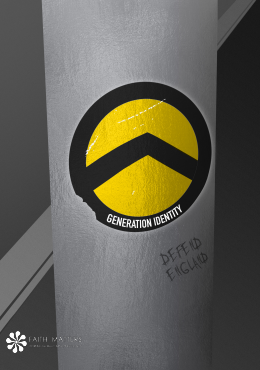
Generation Identity Report

The social polarisation of a globalised world continues. Toxic discourse around ethnicity, identity, citizenship, belonging and nationhood has led to the fracturing of communities along the lines of skin colour and accents rather than shared values. And although societies are far more conscious today to not tolerate racism, what is clear also is that fear and suspicion still breed ignorance, prejudice and bigotry. They become the stones that fuel xenophobic, populist movements rooted in reactionary politics.

The far-right have returned to increasing prominence, their racism masquerading as faux liberalism. Pulsing darkly through their movements remains a deep-seated dislike of those they see as ethnically and culturally different. With politicians increasingly unsure of how to defeat them, we risk veering towards the creation of right-wing, authoritarian societies not wired with empathy but natural hostility towards others.

These movements are a sore test of the values cherished by Western liberalism. As this report will show, the far-right have tracked plenty of support that has frayed the social cohesion of different countries. In a time when immigration and globalisation has created discontent and resentment, the far-right have provided misleading and simplistic answers to deeply complex problems that cannot be resolved simply by banning immigration and turning away all Muslims. As Jose Zuquete explained, “the threat that the Crescent will rise over the continent and the spectre of a Muslim Europe have become basic ideological features and themes of the European extreme right. Thus, the concept of ‘Islam’ galvanizes group action: as the group rallies a ‘defence’ against Islamization.”

The focus of this report will be on Generation Identity, who they are and what they stand for. In the wake of a global refugee crisis triggered by conflicts in the Middle-East, far-right groups such as Generation Identity have emerged portraying immigration and multiculturalism as physical and moral threats to their ways of life.


The post Generation Identity Report appeared first on Faith Matters.

Categories: Alt-Right, Generation Identity, Islamization, Middle East, migration, Publications / Reports, Racial Identity

Conversion is not your mission, pope tells Catholics in Morocco

Pope Francis told the tiny Catholic community in predominantly Muslim Morocco on Sunday that their mission was not to covert their neighbours but to live in brotherhood with other faiths.

Francis has used his two-day trip to stress inter-faith dialogue. He has also backed Moroccan King Mohammed VI’s efforts to spread a form of Islam that promotes inter-religious dialogue and rejects violence in God’s name.

Morocco’s 23,000 Roman Catholics – most of them French and other European expatriates and migrants from sub-Saharan Africa – make up less than one percent of the population of 35 million.

“Christians are a small minority in this country. Yet, to my mind, this is not a problem, even though I realise that at times it can be difficult for some of you,” he said at a meeting with Catholic community leaders in Rabat’s cathedral.

Conservative Catholics have criticised the pope’s opposition to organised or aggressive recruiting of potential converts.

“The Church grows not through proselytism but by attraction,” Francis said to applause.

“This means, dear friends, that our mission as baptised persons, priests and consecrated men and women, is not really determined by the number or size of spaces that we occupy, but rather by our capacity to generate change and to awaken wonder and compassion,” he said.

Moroccan authorities do not recognise Moroccan converts to Christianity, many of whom worship secretly in homes. Conversion from Islam to Christianity is banned, as it is in many Muslim countries, and proselytising is punishable by up to three years in prison.

“The problem is not when we are few in number, but when we are insignificant,” Francis said, adding that Catholics were called to be an integral part of inter-religious dialogue in a world “torn apart by the policies of extremism and division”.

At a Mass for about 10,000 catholics in a sports arena before he was due to return to Rome, the Pope also stressed the need for inter-religious dialogue, saying people should resist “classifying ourselves according to different moral, social, ethnic or religious criteria”.

On Saturday, Francis and King Mohammed VI visited an institute the monarch founded to train imams and male and female preachers of Islam.

Morocco promotes itself as an oasis of religious tolerance in a region torn by militancy. It has offered training to Muslim preachers from Africa and Europe on what it describes as moderate Islam.

At Saturday’s event, Francis praised the king for providing “sound training to combat all forms of extremism, which so often lead to violence and terrorism, and which, in any event, constitute an offence against religion and against God himself”.

Also on Saturday, Jewish leaders joined Christian representatives in the front row at two events presided over by the pope and the monarch on interfaith dialogue.

Francis’ appeal for inter-religious dialogue was made more poignant on Sunday by the presence in Rabat cathedral of Father Jean-Pierre Schumacher, a 95-year-old French monk who survived what is known as the Tibhirine massacre in Algeria.

In March 1996, seven French monks were kidnapped in a monastery in the central Algerian village of Tibhirine during the civil war between the government and Islamist rebel groups.

The monks were held for about two months and found dead, except Schumacher, who managed to escape.

The post Conversion is not your mission, pope tells Catholics in Morocco appeared first on Faith Matters.

Categories: Interfaith dialogue, King Mohammed VI, Morocco, News, Pope Francis

Briton ‘Like Something Out of Mad Max’ In Battle Against IS, Court Told

A British man accused of helping fuel the violence in Syria by joining Kurdish militants fighting Islamic State boasted his life was like something out of Mad Max in one of a series of dairy entries, a court has heard.

Aidan James, 28, from Formby, Merseyside, had no previous military knowledge when he allegedly set out to join the bloody war in 2017 on behalf of the Kurdish people.

James is on trial for engaging in conduct in preparation of terrorist acts and for undergoing terrorist training for his involvement with groups associated with the Marxist political organisation, the PKK.

The PKK, or or the Kurdistan Workers’ Party, has been banned in the UK since 2001 for its advocating of Kurdish self-rule through both political and armed struggle.

James is accused of receiving training from the PKK, including weapons, before going on to fight with a series of Kurdish YPG units, or People’s Protection Units, in Syria.

Prosecutor Mark Heywood QC said: “Mr James is not charged with any offence that his purpose was simply to go to fight Isis, rather the charges are levelled against him because his intention was to lend support to advance a political or ideological cause.”

James prepared himself to join their cause in an “amateurish way” and underwent weapons training in Iraq for a month, the Old Bailey was told.

From there, he went to the Syrian border with Iraq for another month of training, jurors heard.

James had been monitored by police via the anti-terror Prevent programme after broadcasting his intentions on Facebook and had even been arrested on April 28 2017.

He had been bailed until the next month but the bail was cancelled and no further action was taken against him.

On the day his passport was returned, he wrote in his journal that he was still planning to travel to Syria or Iraq “to fight this most important of battles against the sick ideology of Daesh”.

James prepared for his trip by undergoing initial training in north Wales and by acquiring rudimentary combat equipment including body armour.

He later began planning his journey, arriving in Makhmour, Iraq, between the end of August and October 1 2017.

In a series of journal entries he described his training and a series of raids against Isis strongholds.

In one he mourned the death of a fellow soldier, writing: “Great guy.

RIP friend we will continue to fight.”

“Raids went good. After the raids we sat and drank shots of red bull and discussed politics,” another entry read.

In another he describes sitting on the roof of a humvee “with a 50 calibre machine gun, like something out of Mad Max”.

But he also expressed his discontent with the mindset of his commanders, complaining they were trying to brainwash him.

He wrote: “There’s a lot of f***ed up things here. Ideology comes before all else – it’s just basically a f****** brainwash factory.

“I’m here to help people. Not to get brainwashed and change my beliefs.”

Mr Heywood said: “He had picked his cause and it was the cause of just one of the many groups of people that inhabit that part of the world and would like it to be their own, the Kurdish people.

“The prosecution case against him is that he went as an individual to Syria to fight with guns and explosives.”

Mr Heywood added: “For these purposes, the law says that what he wanted to do was terrorism, even if his eventual fighting was against other terrorists.”

James denies engaging in conduct in preparation of terrorist acts and two charges of attending a place used for terrorist training.

The post Briton ‘Like Something Out of Mad Max’ In Battle Against IS, Court Told appeared first on Faith Matters.

Categories: Aidan James, Daesh, Kurdish, Mad Max, News

Two Men Convicted Of Planning To Join Daesh

Two friends who attempted to travel to Syria have been found guilty of preparing for terrorist acts in support of the so-called Islamic State.

Safwaan Mansur, from Birmingham, and Hanzalah Patel, from Leicester, travelled to Turkey in 2016 and 2017 after checking out an area near the Syrian border on TripAdvisor, a two-week trial was told.

Jurors heard the men, who spent nine days in jail in Turkey in 2017 after being arrested at an Istanbul hotel, bought camping equipment, outdoor survival clothing and airline tickets before travelling initially to Germany.

Prosecutors alleged Mansur, 22, of Hampton Road, Aston, and Patel, also 22, of Frederick Road, Leicester, undertook a 24-hour bus journey from Istanbul to near the Syrian border during a previous visit to Turkey in 2016.

Opening the case against the pair at Birmingham Crown Court, prosecutor Simon Davis said they were arrested at Heathrow Airport in 2017 after being reported missing by family members.

During subsequent questioning by police, the court heard Mansur said he had gone to Turkey’s Hatay province – described in court as a “transit area” for Syria – in 2016 to “have a look” like “lots of other tourists”.

Claiming items including water purifiers and solar chargers were found in the men’s luggage, Mr Davis told the court: “Mr Patel, when interviewed, throughout maintained a no comment stance, as was his right.”

Jurors were told Mansur said items in his luggage were gifts for friends at a mosque in Germany, where he intended to stop off en route to or from Turkey.

Outlining Mansur’s account, Mr Davis told the jury panel: “The people at the mosque liked outdoor pursuits like camping – that was the explanation being given.”

Questioning why the former school friends had misled their families and travelled via another country to Turkey, Mr Davis told the jury: “You might want to ask yourselves whether this was an innocent camping holiday or, as the prosecution allege, the two of them engaging in conduct with a view to crossing into Syria with the intention of joining Islamic State.”

Lawyers acting for both defendants said the men had formed a “naive and idiotic” plan to cross into Syria, but had no intention of fighting or committing acts of terrorism.

West Midlands Police said Patel’s father contacted the police force in June 2017 after becoming concerned, having learned that his son had lied about leading prayers at a mosque in Germany.

Commenting on the inquiry, the temporary head of the West Midlands Counter-Terrorism Unit, Chief Superintendent Shaun Edwards, said: “Patel had on his media devices links to an online guide on how to join the terrorist group and he made several successful credit card applications before using the funds to buy the outdoor equipment.

“Electronic devices seized from Patel on his arrest in the UK contained graphic images, videos and text glorifying Daesh. The content gives an insight into their mind-set and showed they were developing an active interest in Daesh and Jihadi ideology.”

Mansur and Patel are due to be sentenced on April 25.

The post Two Men Convicted Of Planning To Join Daesh appeared first on Faith Matters.

Categories: Daesh, Hanzalah Patel, Leicester, News, Safwaan Mansur, Turkey